My dad’s tree is a cute little iliahi, sandalwood that is scarcely a foot tall. I’ve planted it in the brittle cinnamon-shaded volcanic soil at 2,600 feet up the east slant of Mauna Kea, the world’s tallest mountain (as estimated from its ocean bottom base), in a bit of clearing in the midst of 50-foot ohia and koa trees. Father would be content with this dedication planting. He was a geologist, eagerly intrigued by movement and the normal world, and bolstered my own undertakings in those domains.
Photograph kindness of Hawaiian Legacy
We serenade in the quiet morning, drove by Kekaiokalani Naone, a Hawaiian social expert: “I ola no oe, I ola no makou nei.” (You live with the goal that we may live.) This gift is a customary Hawaiian planting conjuring. Right now for the tree, however I ponder how it applies to my dad, as well. He spent on six years back, yet my comprehension of numerous indigenous convictions is that our predecessors are with us consistently—even on this day, as I work here with Hawaiian Legacy Reforestation Initiative, the association directing this planting venture. It’s an action well known with guests to Hawaii Island: The “Grower’s Tour” of the organization’s midmountain forestland close to the Hamakua Coast is an open door for visitors to help reestablish local forests on the island while they experience a beautiful journey.
This movement is an unassuming case of an idea known as kuleana that is picking up noticeable quality in the Aloha State—a way of thinking that advances an uplifted attention to legacy, culture, protection and security. State the travel industry specialists, housing and movement suppliers, network pioneers and government authorities are developing the thought so as to secure the things that make Hawaii uncommon. They are asking visitors to the Islands to grasp the exertion.
“We accept our guests care about propagating the uniqueness of this place,” clarifies Jay Talwar, head promoting official at the Hawaii Visitors and Convention Bureau (which is a piece of the Hawaii Tourism Authority).
In the same way as other Hawaiian words, “kuleana” is a mind boggling term that is hard to communicate succinctly in English. Kuleana grasps different ideas, including uprightness, duty, stewardship, obligingness, custom and regard for nature (and characteristic perils).
Photograph by Andrew Richard Hara
On one level, kuleana can be delineated by the case of assuming liability for your family’s wellbeing around the sea—being alert consistently in or close to the water, not underestimating the ocean, not walking out on the waves. Furthermore, on the off chance that you are not exactly a specialist sea swimmer, picking sea shores with lifeguards.
“If all else fails, don’t go out,” says Jason Cohn, leader of Hawaii Forest and Trail, one of the greatest visit administrators in the state and a purveyor of undertakings on Hawaii Island and Oahu. The organization’s contributions run from well of lava situated day excursions to cascade climbs along little-voyaged streams that plunge down from the island’s volcanic pinnacles.
Comparable exercise-decision making ability standards apply to climbing in the Islands. You need to be certain you convey fundamental apparatus, mind the climate, be careful that you just enter lands that are available to you, regard the scene and its history … and make the most of your encounters.
On another level, kuleana is tied in with looking for encounters that upgrade your insight into characteristic and social history. I join a Hawaii Forest and Trail visit drove by Cohn up a slope on the north finish of Kohala, the most seasoned of Hawaii Island’s volcanoes. Here, the supplier goes for guests on strolls in a little, exclusive ravine in the network of Hawi. We traverse the Kohala Ditch, a water system flume that has conveyed water to crops since the mid 1900s—and Cohn educates us concerning the historical backdrop of neighborhood sugar stick cultivating. We visit a little clearing where we can see conventional Hawaiian nourishment plants, for example, kalo (taro), breadfruit, banana and sweet potato, all developing in a reestablished cultivating porch. We explore thick, dull stands of strawberry guava, an intrusive nonnative plant that has overtaken quite a bit of Hawaii’s unique backwoods and that individuals work to expel. Also, we become familiar with the sheltered method to approach and dive into a shining pool underneath a little cascade—watching our balance on smooth shakes and checking cautiously for risky shakes above and beneath the water’s surface.
“Astounding how cool and invigorating it is,” Cohn enthuses. Submerging guests in Hawaiian terrains and legacy, he accepts, makes setting that will support a feeling of place, which thus prompts more noteworthy consideration for the Islands—and an improved get-away understanding.
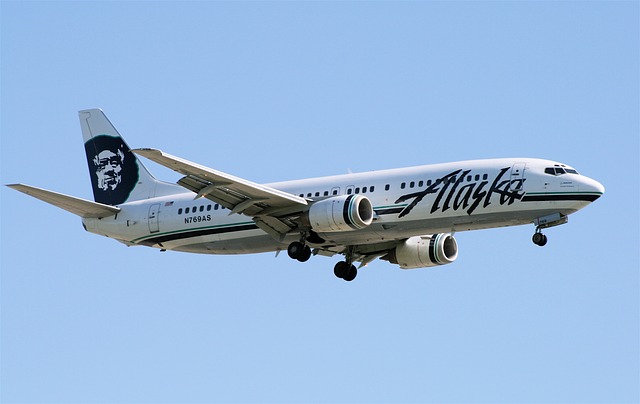
Cohn is one of 15 network pioneers whom the Hawaii Tourism Authority and Hawaii Visitors and Convention Bureau have enrolled as representatives in recordings intended to assist guests with comprehension and practice kuleana. Sea specialists, social experts, craftsmans, entrepreneurs and writers all clarify why the Islands are novel, and how guests can help keep them that way. Guests can search for the film cuts on, among different places, Alaska Airlines flights to Hawaii. Kuleana Campaign recordings can likewise be found on YouTube.
In one video, Oahu preservationist Ocean Ramsey encourages you to utilize reef-safe sunscreen. Coral-executing sunscreens are restricted in Hawaii, yet guests may accidentally bring risky items from home. In another video, Maui meteorologist Malika Dudley urges you to ensure you’re pursuing a private settlement that is honestly authorized for rental. In one more, Kauai-based social specialist Sabra Kauka proposes committing some an opportunity to charitable effort that helps save Hawaii.
That is my specialty one morning at Hawaii Volcanoes National Park, one of the state’s most prominent goals. This time, I’ve enrolled in the obtrusive species fight against a plant that from the start may appear to be very alluring. Himalayan ginger’s tall stems with reflexive evergreen leaves are bested by appealing towers of fragrant blossoms in rich yellow and orange. It’s a universal scene plant in the Islands, seen in numerous patio gardens. But at the same time it’s a forceful plant that has gotten away from its kept arranging utilizes and is outcompeting local species in certain territories.
“Astounding what a distinction our exertion makes,” watches team pioneer Jane Field of the recently open, sun-strewn small clearing I’ve made in the forested areas about a mile from the recreation center’s guest place. I chipped away at one ginger fix while others handled close by regions. Utilizing large pruning shears, I cut 6-foot ginger towers and stacked them cautiously where they wouldn’t choke out minimal local plants attempting to develop. I yanked out a couple of intrusive guava seedlings, too, attempting to account for the plants and blossoming bushes that are endemic to the timberland.
Photograph cordiality of Hawaii Volcanoes National Park
Field and her better half, Paul, lead week after week work sessions at the recreation center under a program called Stewardship at the Summit. It’s one of many volunteer undertakings guests are free to partake in.
On the off chance that even a little segment of Hawaii explorers participated in such exercises, the impact would be gigantic. With in excess of 10 million guests per year—about 33% of them from remote nations—Hawaii is among the most well known and most popular travel goals on Earth. Every year, travel contributes about $20 billion legitimately to the state’s economy, a fifth of all financial movement in the Islands.
Hawaii inhabitants and network pioneers respect the guests who arrive at the chain of islands; the Aloha State is known worldwide for its moniker. Salud implies, in addition to other things, “welcome.” But, as Talwar calls attention to, the significance of “salaam” additionally incorporates regard and care, as does the importance of “kuleana.”
Photograph civility of Hawaii Volcanoes National Park
Hawaii is one of numerous goals soliciting visitors to be increasingly cognizant from their activities while voyaging. Dependable travel battles are grabbing hold far and wide, from Canada to Italy to Peru. The Republic of Palau, a little Pacific Island country, blended worldwide notification when, in 2017, it sanctioned the Palau Pledge that all guests are required to sign before entering the nation. This vow, routed to the offspring of the country, is stepped in identifications and propels underwriters to proceed with caution and deferentially.
Most goals settle on Hawaii’s methodology, which is to advance nonmandatory collaboration with the expectation that guests will understand that mindfulness around supportability and wellbeing is for everybody’s advantage. Intentional vows for guests were first presented on Hawaii Island and on Kauai as of late. Guests vow to be pono (interpreted as “noble”) when they sign the Island of Hawaii Pono Pledge (ponopledge.com). There is likewise some expectation that this promise, alongside Kauai’s Aloha Pledge (alohapledge.com), may move a statewide adaptation attached to the Kuleana Campaign and its mindfulness recordings.
“Hawaii touches your heart—and we as a whole need to secure that,” says Sue Kanoho, official executive of the Kauai Visitors Bureau. “We trust these recordings plant the seed for individuals to be progressively mindful of the individuals and the place.”
Kauai has battled with unwelcome practices, for example, enormous quantities of guests infringing on private land or intersection boundaries to get to risky cascades. The Kauai Visitors Bureau and Hawaii Tourism Authority demoralize geotagging, an act of marking areas where photographs were taken, which has been connected to mishaps, trespassing and stuffing. Specialists ask that, in the event that you locate an extraordinary spot, you accept pictures as keepsakes, and offer them reasonably. They demand that you not post something that could attract thousands to a lofty precipice, or onto private or holy land.
“Would you go up to someone’s home, open the entryway and stroll in without thumping?” asks Puni Patrick, a kumu (hula educator) and Hawaiian social expert on Kauai who harvests salt at an old salt-lake complex close Waimea on Kauai’s south shore. Situated beside a state park mainstream with campers and picnickers, the salt-lake complex isn’t a proper territory for bystanders to just meander into.
Hawaiians have been making salt here for a long time. It is a loved place where in excess of 20 families currently proceed with the yearly salt-production legacy that used to be an essential workmanship for the individuals who flourished in the tropics, without refrigeration. As indicated by legend, the goddess Pele dropped by on her quest for a home in the Islands, and the salt-production lakes encapsulate the astounding indigenous Hawaiian way of life that empowered individuals to live independent lives in these islands. A few families who enter the salt-lake zone with visitors initially play out a serenade/tune that asks consent and approaches the spirits of the individuals who have worked here for a considerable length of time.
Photograph politeness of Four Seasons Resort Hualalai
While the terrains, waters, natural life and other physical traits of the Islands are among the numerous fixings that make Hawaii one of a kind, the indigenous social and profound legacy of Hawaii is maybe its most particular element—one that is simple for guests to watch today.
The Hawaiian language, for example, is a wonderful, suggestive tongue getting a charge out of a glorious renaissance. Semantic learning open doors for guests remember snappy tips for articulating words from barkeeps at The Olelo Room, a Hawaiian-language-motivated parlor at Aulani, A Disney Resort and Spa on Oahu. They additionally incorporate entire weekslong classes custom fitted to the numerous mainlanders who go through a while in the Islands in winter. The language application Duolingo likewise has Hawaiian abilities.
Hula classes, when uncommon, are omnipresent now; among the most well known are the sessions during the time at Waikiki’s Royal Hawaiian Center, where visitors discover that hula is a profoundly significant social practice.
Close by, at The Royal Hawaiian, a Luxury Collection Resort, visitors can join a dawn function in which members drench themselves in the sea and play out a serenade that thanks the sun for its arrival, and favors our predecessors for carrying us right up ’til today. My cooperation a couple of years back right now function, at The Ritz-Carlton, Kapalua, on Maui, was the first occasion when I conjured my dad’s soul in the Islands.
“I need individuals to appreciate what I have delighted in for a long time, in the manner in which I was raised,” says Earl Kamakaonaona Regidor, social guide at the Four Seasons Hualalai on Hawaii Island, and a Kuleana Campaign represetative.
Regidor’s mom was full-blooded Native Hawaiian, and her direction helped him make a feeling of kuleana that is explicit to the island he possesses. Guests to the retreat’s Kaupulehu Cultural Center can learn words in the Hawaiian language, lauhala weaving, lei-production or ukulele playing—a considerable lot of these instructed by Regidor himself.
Regidor credits his precursors for showing him the kuleana lifestyle. His dad, for instance, would bring him down to the shore (at the specific area where Regidor now works) and they’d fish … for only a half-hour. Regidor asked, “Father, for what reason did we come right here just to spend a half-hour?”
“Since it’s entitlement to take just what you need—not what you need,” his dad let him know.
“Regard the individuals, the way of life and the history,” Regidor inclinations. “My mom showed me: ‘Don’t live previously, however gain from it.’
Airlines for Flights to Hawaii
United Airlines
 flightodestinations